Reading Between the Wrapper: UK Supermarket Snacks and Your Teeth in 2026
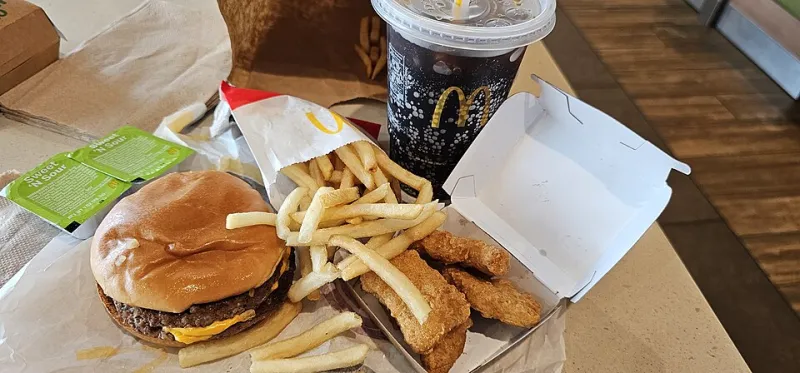
Photo: Wamploid Cthulhuloid, CC BY 2.0, via Wikimedia Commons
Walk into any UK supermarket in 2026 and you'll see shelf talkers promising 'tooth-friendly' this and 'no added sugar' that. Some of it is fair. Some of it is marketing doing a little dance around the facts. We're not naming brands here; we're naming patterns. Below is an honest audit of the snack categories that turn up in lunchboxes and desk drawers, plus a label-reading checklist you can use in about thirty seconds.
Why 'tooth-friendly' is a phrase, not a promise
In the UK, 'tooth-friendly' is not a tightly regulated term in the way 'organic' or 'fairtrade' is. It can be used loosely. A product might be sugar-free but acidic. It might contain no added sugar but plenty of natural sugars from dates or fruit juice. It might be sticky enough to sit on the teeth long after the packet is empty. None of that makes the snack evil. It just means the sticker on the front is not the whole story.
The more useful question is not 'is this tooth-friendly?' but 'what does this do in my mouth, and how often?' Frequency matters. A sugary snack with a meal is different from the same snack sipped or nibbled across the whole morning. Texture matters. Acidity matters. And the ingredients list usually tells you more than the marketing copy.
The cereal bar shelf: oats don't cancel out syrup
Cereal bars often present themselves as wholesome. Oats, seeds and 'natural' ingredients sound reassuring. But many bars are held together with glucose syrup, invert sugar or date paste, and some contain dried fruit that sticks to the teeth. A bar with 8g of sugar per portion is not automatically a problem, but it is still a sugary snack. If it is chewy and slow to eat, the teeth get a longer exposure.
'No added sugar' bars deserve a closer look. They may contain no sucrose, but dates, raisins and fruit juice concentrates still contain sugars. The label may be technically accurate and still not mean 'good for teeth'. Look at total sugars per 100g and per portion, then look at the texture. A bar that crumbles and clears quickly is generally a better bet than one that glues itself to your molars.
Dried fruit: natural sugar still sticks
Raisins, sultanas, apricots and date pieces are common in lunchboxes because they are convenient and count towards fruit intake. They also contain natural sugars and tend to be sticky. That combination means they can cling to the grooves of the teeth and between them. They are not a reason to panic, but they are not a free pass either.
If dried fruit is part of the lunchbox, keep it to mealtimes rather than as a grazed snack, and pair it with water or a small piece of cheese. Cheese helps neutralise acid and adds calcium. A handful of raisins followed by a water bottle is a better pattern than raisins eaten slowly on the bus. For everyday snacks, fresh fruit is usually kinder to teeth because it contains more water and is less sticky.
Flavoured water: the acid question
Flavoured water often carries a 'no added sugar' or 'zero sugar' badge. That can be true and still leave the drink acidic. Ingredients such as citric acid, malic acid and phosphoric acid can soften enamel, especially if the drink is sipped repeatedly through the day. Sparkling flavoured water can be acidic too, even without sugar.
Water and plain milk remain the default drinks for teeth. If someone likes a flavoured water, keeping it to mealtimes and using a straw can reduce contact with the teeth, but it does not make it a neutral drink. The worst pattern is a bottle on the desk that is sipped from 9am to 5pm. That keeps the mouth in a more acidic state for hours.
Sugar-free gum: the one that often earns its place
Sugar-free gum is one of the few supermarket snack-aisle products that often does what it says on the packet. Chewing gum increases saliva, which helps clear food and neutralise acid. Gum containing xylitol may be particularly useful. It is not a substitute for brushing, and it is not suitable for young children or anyone who has swallowing difficulties. It also does not undo a sugary snack completely.
If you chew gum, choose sugar-free and use it after meals rather than constantly through the day. Check the sweeteners if you have a sensitive gut. And remember that gum is an add-on to good brushing, not a replacement for cleaning between the teeth.
A thirty-second label checklist
- Look at total sugars per 100g and per portion. UK traffic-light labels are a useful shortcut: high total sugars is more than 22.5g per 100g, low is 5g or less. A small portion can still matter if it is sticky.
- Check for 'no added sugar' caveats. It means no sucrose or table sugar has been added, not that the product is sugar-free. Dates, fruit juice and honey still count as sugars.
- Scan for acids. Citric acid, malic acid, phosphoric acid and ascorbic acid can all contribute to an acidic mouth environment. Drinks are the main concern.
- Ask whether it is sticky. Dried fruit, chewy bars and toffees linger. Crisp, quick-clearing foods are kinder.
- Think about frequency. One snack at mealtime is different from constant nibbling. The number of sugar exposures matters more than the total in one sitting.
- Check the sweetener. Xylitol and sorbitol are common in sugar-free products. They are not the same as sugar, but some people are sensitive to them.
Swaps that survive a lunchbox and a desk drawer
For lunchboxes, try cheese cubes, plain yoghurt, veg sticks, oatcakes, plain popcorn, a boiled egg or a small pot of hummus. If your school allows nuts, unsalted nuts are a useful option. Swap dried fruit for fresh fruit most days, and keep flavoured drinks for occasional use rather than the daily bottle.
For desk drawers, keep a water bottle, unsalted nuts, oatcakes, plain popcorn or a small pack of sugar-free gum. A piece of cheese or a plain yoghurt from the fridge is better than a cereal bar if you need a mid-afternoon snack. The aim is not perfection. It is fewer sticky, sugary, acidic exposures across the day.
The bottom line
A 'tooth-friendly' sticker is a prompt to look closer, not a guarantee. The best snacks for teeth tend to be simple, quick to eat and low in free sugars and acid. Keep sugary and acidic items to mealtimes where you can, choose water as the default drink, and let the ingredients list have the final say. If you're unsure about a particular product or a family member's snacking pattern, bring it up at your next Lonsdale appointment. We'd rather help you build a realistic routine than ask you to give up the snack aisle altogether.