Before the Bib Goes On: The Clues Your Dentist Spots in Seconds
Photo: Unknown, CC BY 4.0, via Wikimedia Commons
Most people assume a dental check-up begins when the bib goes on. In reality, it starts a little earlier: in the way you say hello, settle into the waiting room, and answer that first question about how your mouth has been. At Lonsdale Dental Practice, we are not running a secret test. There is no scorecard and no pass mark. But years of looking at mouths do create a kind of pattern recognition. Dentists notice small things quickly, often before the chair has reclined.
That can feel exposing if you have been putting off a visit. So let us be clear: none of these observations are about catching you out. They are simply clues that help us ask better questions, tailor advice to you, and decide whether something is worth a closer look.
This is not a test, and you have not failed it
A dentist is not scanning the waiting room for imperfection. We are noticing changes that might matter: enamel that looks thinner than expected, gums that look inflamed, a jaw that seems tightly held. Some of these things are common and easily managed. Others are worth a conversation. The point is not judgement. The point is to make the check-up more useful than a quick glance and a rinse.
1. The look of your enamel
Enamel is the hard outer layer of the tooth, and it can wear away over time. From across the room, a dentist may notice teeth that look a little more translucent at the edges, or front teeth with a slightly glassy, shortened appearance. Sometimes this is simply how your teeth are shaped. Sometimes it hints at erosion from acidic drinks, reflux, or a grinding habit.
If you have noticed sensitivity to cold drinks, a change in the shape of your front teeth, or a yellowish tone where the enamel has thinned, mention it. You do not need to wait for a problem to become obvious. Early enamel wear is often easier to discuss than to reverse.
2. The colour and feel of your gums
Healthy gums are not always a neat, uniform pink. They vary between people. But gums that look puffy, shiny, or darker around the edges can suggest irritation. So can gums that bleed when you brush, even a little. A dentist may spot this as you talk, or when you smile, before any probe comes out.
Bleeding is not automatically a sign that you have been doing something wrong. It can be an early signal of gum inflammation, a change in brushing technique, a new medication, or a hormonal shift. If your gums bleed most days for more than a couple of weeks, it is worth booking. If they are sore, swollen, or pulling away from the teeth, book sooner.
3. How your jaw sits when you think no one is looking
Jaw tension is one of those clues that rarely gets mentioned in adverts for toothpaste. A dentist may notice you holding your jaw tightly, or you may mention headaches, a clicking jaw, or teeth that feel tender in the morning. That combination can point towards clenching or grinding, often during sleep.
You do not need to diagnose yourself. But if you wake with a tight jaw, have unexplained earache or headaches, or notice flattened tips on your teeth, it is worth raising. A night guard is not the answer for everyone, but a conversation can help work out what is going on.
4. The story told by your brushing marks
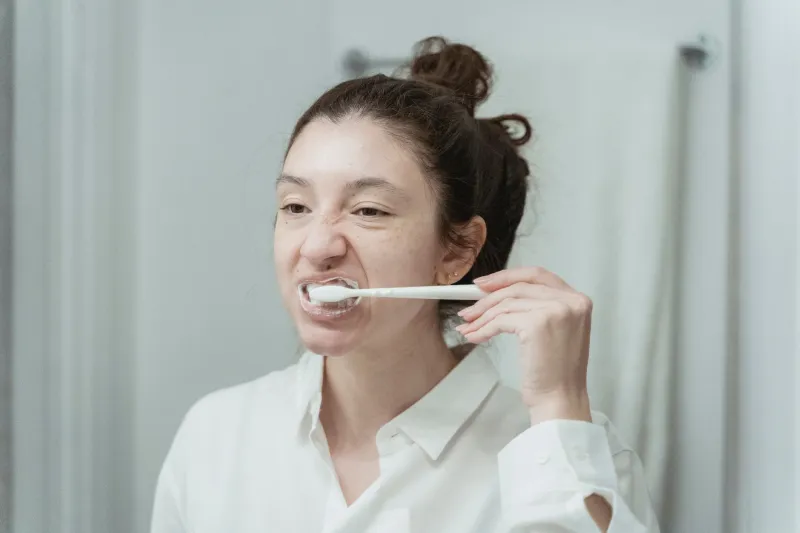
Brushing is meant to clean teeth, not scrub them. A dentist can sometimes see the results of a very firm hand: small notches near the gum line, receding gums, or a polished, worn patch on a tooth. These are not moral failings. They often come from good intentions and a hard-bristled brush.
If you use a manual brush, try holding it as you would a pen rather than a scrubbing brush. If you use an electric toothbrush, let the brush head do the work and avoid pressing hard. And if you have noticed your gums look lower than they used to, ask about it. Early advice is usually simpler than later treatment.
5. The small hesitations before you answer
Sometimes the most useful clue is not visual at all. It is the pause before you answer a question, or the way you say you have been fine when your face suggests otherwise. Dentists are used to hearing that people feel embarrassed, busy, anxious, or unsure whether a symptom is worth mentioning.
You do not need to arrive with a perfect history. A simple sentence is enough: I have been avoiding this bit, or this tooth has felt odd since about March, or I am not sure if this is normal. We would rather hear the messy version than have you sit quietly with a concern.
When a clue is worth booking for
A one-off twinge after a cold drink is not usually an emergency. But a change that lingers is worth attention. Book a check-up if you have bleeding gums that do not settle, jaw pain that keeps returning, sensitivity that is getting worse, a persistent bad taste or bad breath, a mouth ulcer that has not healed after two to three weeks, or any new lump or patch in the mouth.
At Lonsdale, a check-up is a chance to compare notes, not to hand out a grade. If you have been putting off a visit because you are worried about being told off, you are welcome to say so. That is a useful clue too.
The takeaway
Your mouth is already telling a story before the bib goes on. The good news is that most of that story is about everyday habits, small changes, and things that can be talked through. You do not need to arrive with perfect teeth or perfect answers. You just need to turn up, and let us take a look.