Pink in the Sink: A Calm Plan for Gums That Bleed When You Brush

Photo: Carlquist, Sherwin John, 1930-2021, CC BY 4.0, via Wikimedia Commons
There is a particular sort of worry that arrives when you spit into the sink and see a streak of pink. It can feel like a warning light you did not ask for. The good news is that bleeding gums are usually a message rather than a sentence. In most cases, it is the gum tissue telling you that plaque has settled a little too comfortably along the gumline — and that a few sensible changes are worth making now.
At Lonsdale Dental Practice, we would rather you felt informed than alarmed. So here is a calm, practical look at what those pink traces can mean, what to do this week, and when it is worth picking up the phone.
Why the pink appears in the first place
Your mouth is home to a lot of bacteria, and most of them are not villains. Problems start when plaque — the soft, sticky film that builds up on teeth and along the gumline — is left undisturbed. The gums respond with a bit of inflammation. That inflammation is why they can look a little redder, feel tender and bleed when you brush or clean between your teeth.
This early stage is often called gingivitis. The important word is early. At this point, the gums are reacting to plaque, and good daily cleaning can settle things down. If plaque is left alone for long enough, the inflammation can spread deeper and affect the structures that hold teeth in place. That is why the pink in the sink is worth listening to, even though it is not a reason to panic.
The one thing not to do: stop brushing
It is a very human response. The gums bleed when you brush, so you brush more gently — or skip the area altogether. Unfortunately, that usually makes the bleeding worse. Less brushing means more plaque, and more plaque means more inflammation. The gums keep bleeding because the cause is still there.
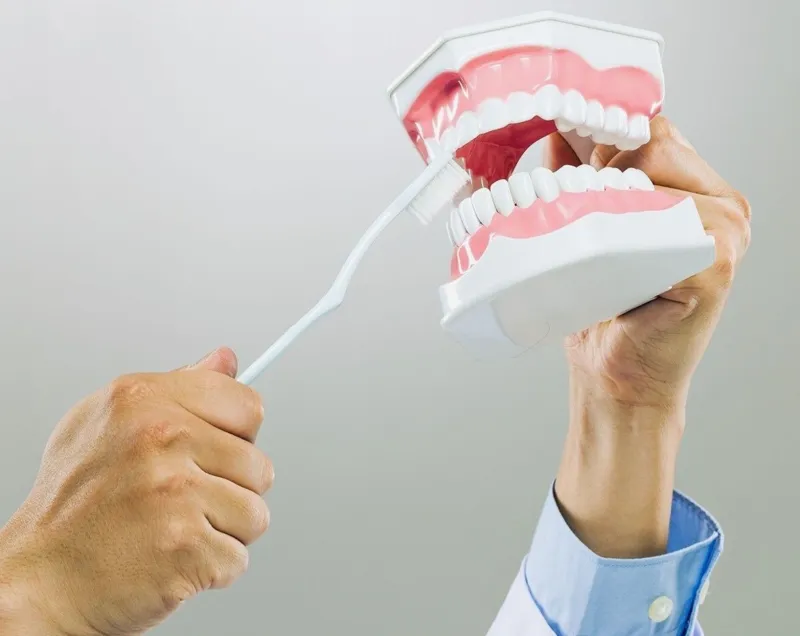
What you want is not less cleaning, but kinder, more effective cleaning. A soft-bristled brush with a small head is a good place to start. Angle the bristles towards the gumline at roughly 45 degrees and use small, gentle circles rather than a sawing motion. Spend two minutes, twice a day, and make sure the brush actually meets the gumline instead of skating over it.
After brushing, spit out the excess toothpaste rather than rinsing with water straight away. Leaving a little fluoride toothpaste on the teeth gives it a bit more time to do its job.
Clean between the teeth, even if it bleeds a little
Brushing only reaches part of each tooth. The spaces between teeth are where plaque likes to gather quietly. Interdental brushes, floss or floss picks can disturb that plaque, and yes — the gums may bleed for a few days when you start.
That initial bleeding is common. It is not a sign that you are doing damage. It usually settles as the gums become less inflamed. If it carries on beyond a week or two despite regular cleaning, or if it is heavy or painful, that is a good reason to ask your dentist or hygienist to take a look. They can check your technique and whether the spaces between your teeth need a different size of interdental brush.
Mouthwash is not a substitute for the brush
A mouthwash can feel refreshing, and it can have a place in some routines. But it should not replace brushing or cleaning between the teeth. If you use one, avoid rinsing with it immediately after brushing, because it can wash away the fluoride toothpaste you have just left on your teeth. Using it at a different time of day is usually more sensible. If you have a dry mouth or sensitive gums, an alcohol-free option is often kinder.
Everyday things that can make gums more reactive
Bleeding gums are not simply a question of willpower or perfect habits. Several everyday factors can make the gums more likely to bleed.
Pregnancy brings hormonal changes that can make gum tissue more sensitive. Some medications, including blood thinners, can affect bleeding, while others can cause dry mouth. Smoking is another important one: it can mask the early signs of gum problems because it reduces blood flow to the gums, and it also affects healing. Stress, illness and a dry mouth can all make the mouth feel more vulnerable too.
None of this is about blame. It is about context. If you are pregnant, taking regular medication or going through a stressful patch, tell your dentist. It helps them interpret what they are seeing.
When it is more than a little plaque
Most mild bleeding related to plaque improves with consistent brushing and interdental cleaning. But some signs deserve a dental appointment rather than a wait-and-see approach. Book a check-up if your gums bleed spontaneously, if the bleeding is heavy or does not stop, if your gums are swollen or painful, if you notice pus, bad breath that will not shift, receding gums or a loose tooth.
Seek urgent help if there is significant facial swelling, fever, difficulty swallowing or breathing, or bleeding that will not stop. Those are not typical gingivitis symptoms, and they should not be left to see how things go.
What to ask at your next check-up
You do not need to arrive with a speech. A simple sentence is enough: my gums bleed when I brush, and I would like you to check them. Ask whether your cleaning technique looks effective, whether you would benefit from a different interdental aid, and whether anything in your medical history or medication list could be contributing. If you have noticed bleeding for more than a couple of weeks, say so.
Bleeding gums are common, treatable and worth taking seriously without turning them into a catastrophe. Keep brushing gently, clean between the teeth, and let your dental team help you work out what your gums are trying to say.