Why We Still Fight for the Tooth: A Calm Look at Root Canal Treatment
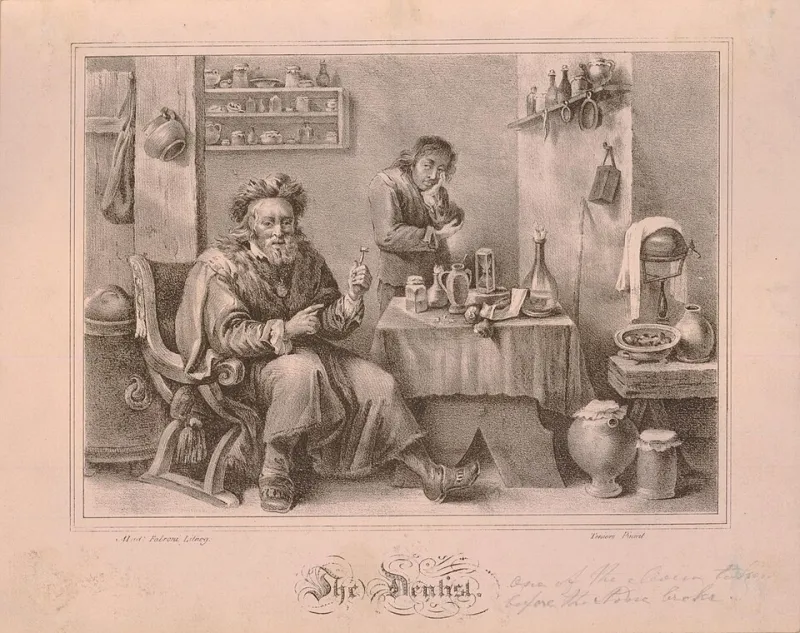
Photo: After: David Teniers the Younger Print made by: A Fabroni, Public domain, via Wikimedia Commons
There's a particular look people get when you say the words "root canal". It's the same look they'd give if you suggested a parking fine. And yet, week after week, patients who arrive convinced they want the tooth out end up keeping it — and being glad they did.
This isn't a pitch. Sometimes extraction genuinely is the right answer. But the decision deserves better than fear, and in 2026 the treatment itself is a long way from its reputation.
Where the reputation came from
The dread is inherited. Decades ago, root canal work was slow, it was often done in stages, and the anaesthetic options were limited. Those experiences were real, and they got baked into jokes, films and a general cultural flinch that has outlived the technology by a wide margin.
Meanwhile, the tools changed completely. Rotary nickel-titanium files, apex locators that measure canal length electronically, magnification and, in specialist settings, dental microscopes — the modern version is quieter, quicker and far more predictable than the version people are actually afraid of.
What's happening inside the tooth
Under the enamel and the dentine is a chamber of soft tissue — the pulp — containing nerves and blood vessels. It can become inflamed or infected through deep decay, a knock, a cracked filling or a leaking crown.
Once that happens, the tooth can't heal itself. Pressure builds, and you get the classic signs: throbbing pain, pain on biting, tenderness to hot and cold, sometimes a swollen gum or a bad taste. Occasionally there's no pain at all — the infection is simply found on an X-ray.
A root canal removes the inflamed or infected tissue, disinfects the inside of the tooth, and seals it so bacteria can't get back in. The tooth stays exactly where it is and keeps doing its job.
The myths, one at a time
"It's agony." The pain comes from the infection, not the treatment. With a properly anaesthetised tooth — and infected teeth sometimes need a little more work to get numb — the appointment is usually uneventful. Most patients describe the relief afterwards as the memorable part.
"It kills the tooth, so what's the point?" The pulp is gone, but the tooth itself isn't. It remains anchored in bone, it still bites, and it still looks like a tooth. What's been removed is the infected tissue.
"It'll need redoing in a couple of years." Many root-treated teeth last a decade or more, and plenty last a lifetime. Success depends on the tooth, the seal, the final restoration and how well you look after it. It's not a guaranteed fix, but it's far from a stopgap.
"Extraction is cheaper and simpler." Cheaper on the day, certainly. Then you're weighing up a gap that lets neighbouring teeth drift, bone that shrinks over time, and a replacement — bridge, implant or denture — that usually costs more than the root canal would have. Simplicity tends to look different once you price the replacement.
"Root canals cause illness." This one traces back to a theory from the early 1900s that was abandoned by mainstream medicine long ago. It still circulates online. A treated tooth is not a source of systemic disease.
What the appointment actually involves
- Diagnosis. X-rays, tests on the tooth, sometimes a 3D scan in complex cases.
- Numbing. Local anaesthetic, and more of it than a simple filling sometimes needs.
- Isolation. A rubber dam goes over the tooth to keep the area dry and clean — this is a marker of good practice, not an optional extra.
- Access. A small opening through the top of the tooth into the pulp chamber.
- Cleaning and shaping. The canals are measured and cleaned with fine instruments and disinfecting solutions.
- Sealing. The canals are filled with a rubbery material and sealer, then the tooth is closed.
- Restoration. Often a crown afterwards, particularly on back teeth, to protect what's left.
Straightforward front teeth are sometimes finished in one visit. Molars, or teeth with curved or complex canals, may take two. Afterward, expect a few days of tenderness on biting — usually manageable with ordinary painkillers.
NHS and private: how the routes differ
On the NHS, root canal treatment usually falls into Band 2, with a crown in Band 3 — a fixed national charge rather than a per-item price, and one that's adjusted each spring. The catch isn't the fee, it's access: NHS dentistry availability varies a lot by area, and more complex cases may be referred onward.
Privately, the price depends on the tooth, the number of canals and who's doing it. Front teeth are typically at the lower end, molars at the higher end, and a specialist endodontist will charge more again. You're generally paying for longer appointments, magnification, and a higher chance of a complicated case going smoothly first time.
Neither route is a comment on the standard of care. What's worth asking either way: how many visits, who's carrying it out, what's included, and what happens if it doesn't settle.
Realistic aftercare and the long view
- Get the crown sorted promptly. An unrestored root-treated tooth is vulnerable to fracture, and a fracture can undo the whole thing.
- Mention your bite. If the tooth feels high when you close, a quick adjustment usually sorts it.
- Keep cleaning around it. These teeth need brushing and interdental cleaning like any other — the gum around them matters as much as the tooth itself.
- Watch for grinding. If you clench at night, a guard protects the investment.
- Expect monitoring. Regular check-ups and occasional X-rays let us see how the seal is holding up.
Questions worth asking before you decide
- Can this tooth be saved, and what are the odds?
- What does the alternative cost me over ten years, not just next month?
- Is a crown needed, and when?
- Would a specialist do anything differently here?
- If it fails, what then?
Losing a tooth is easy. Getting a good replacement is neither easy nor cheap. That's the whole argument in one line — and it's why, when there's a reasonable chance of saving a tooth, we'll usually suggest trying.